Conclusion

Conclusion

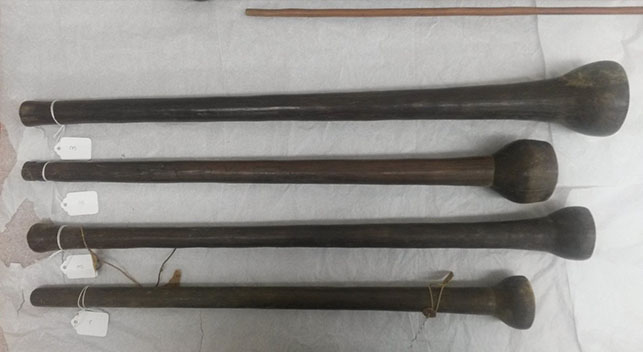
 This image of what are likely four knobkerries greatly influenced my direction for this project. The inaccurate description of these knobkerries in the Huron Missionary Museum collection records as “Club used for infanticide” epitomizes the damaging influence of colonial collections. Photograph by Remi Alie.

The goal for this series of blog posts was to illustrate that many institutions like museums and universities exhibit colonial influence in their Indigenous collections. I conclude that these institutions can begin to heal the harm caused by their involvement in colonialism by researching their collections and engaging in the repatriation process. Huron University’s remaining Missionary Museum collection stands as an example of the colonial legacies of early archaeologists as actors of empire. I use this collection as a backdrop to analyze colonial collections at public institutions. In aiming to repair their colonial legacies, institutions should begin the process of repatriation. I stress that repatriation is about more than just returning objects to the people they came from. It takes many forms like researching the collection, providing wider access to information about the collection, extending partnership and agency in the collection, and loaning collections to communities.

Repatriating incorporates more opportunities for repairing the damages caused by colonialism than solely the return of artifacts to source communities. Additional means of repatriation lessen the barriers institutions face when considering decolonization. In “Repatriation in university museum collections: Case studies,” Jordan Jacobs, the Policy & Strategy Advisor, Office of the Vice Chancellor for Research at Cambridge University, and Benjamin W. Porter, associate Professor of Archaeology at California University, argue that repatriation should be a common occurrence rather than an extraordinary circumstance for museums to undertake. Furthermore, they argue that, in addition to the physical return of objects, successful repatriation can be the “sharing of actionable information with potential recipients.” [1] Viewing repatriation as a normal operation for an institution with a colonial legacy is an important aspect of increasing willingness to begin repatriation. Further increasing the potential for repatriation is an awareness of repatriation as more than solely the return of objects to their communities. Returning objects is, of course, an immensely important part of repatriation. But research increases knowledge about the artifacts and can thus lead to more opportunities for the proper repatriation of objects. With institutions like Huron University where the remaining database lacks proper information about the collection, researching the objects could help identify aspects such as potential source communities, the meanings of the objects for a source community, or historical uses of the objects. For example, in researching the supposed “Club used for infanticide,” I found that many East African communities used clubs called knobkerries as weapons for hunting and occasional warfare. Thus, the clubs were not designed for infanticide and their proper name is knobkerrie. With this completed research, the database now provides more accurate information about the artifact.

To wrap up this series, I want to push colonial institutions to begin the process of repatriation. This is possible through a variety of methods, but researching collections is a significant first step. There are many ways they can go about this process. For example, have students or employees respectfully interact with the objects and research their histories, fund research grants to hire students or professionals to research the collection, and reach out to Indigenous communities for their object knowledge. It is through research that museums and universities can better understand the meanings of their colonial collections and thereby enact proper repatriation if source communities choose to explore the return of their objects.


[1] Jordan Jacobs and Benjamin W. Porter, “Repatriation in University Museum Collections: Case Studies from the Phoebe A. Hearst Museum of Anthropology,” International Journal of Cultural Property 28, no. 4 (2021): pp. 531-550, https://doi.org/10.1017/s0940739121000400, 533.
 

Indigenous Erasure and T. B. R. Westgate

Indigenous Erasure and T. B. R. Westgate

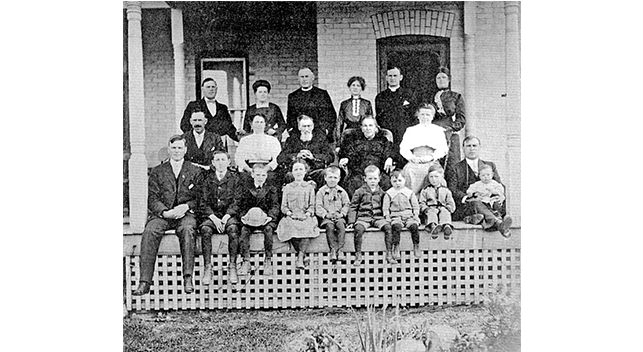
T. B. R. Westgate and his family at Watford, Ontario. Photograph from Lambton Heritage Museum. Westgate – Lambton County Museums (lambtonmuseums.ca)

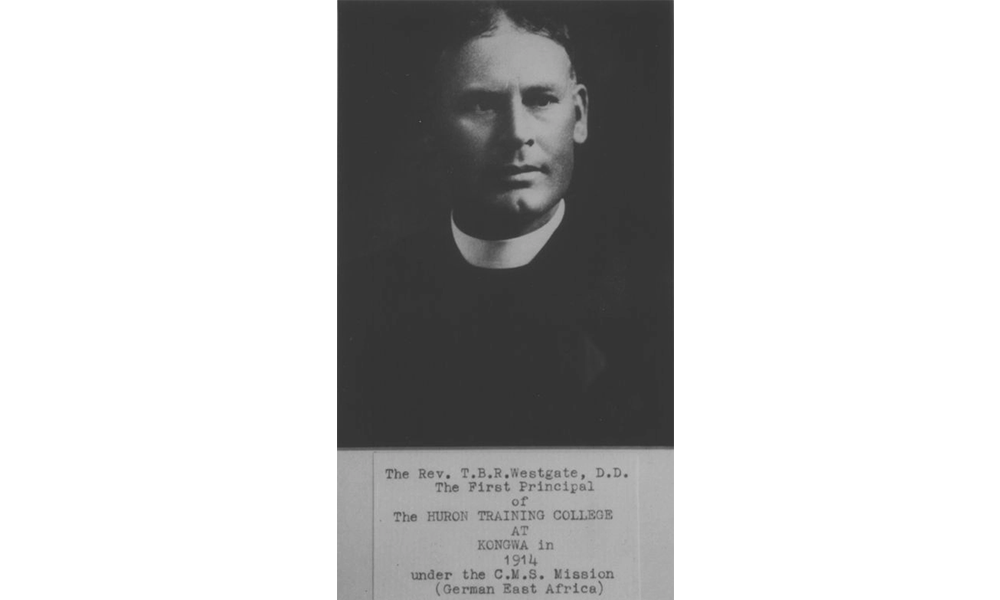
This post is a follow-up to week 4’s post, titled “Huron’s Colonial Purpose in Africa. Since writing that post, I’ve conducted further research on T. B. R. Westgate, who I identified as a missionary in German East Africa and South America. Another significant part of Westgate’s life that I did not mention is his role as Chief Administrator of the Anglican Church’s “Indian and Eskimo Commission” for residential schools. [1] In this role, Westgate oversaw eighteen residential schools and opened many new ones across Canada under the Anglican Church. [2] Throughout his work as a missionary in East Africa and Field Secretary of the Anglican residential school system, Westgate aimed to assimilate Indigenous peoples and erase their history in favour of a Christianized culture. This post will discuss more of Westgate’s views of the people he interacted with as a missionary in East Africa and Field Secretary in the Anglican residential school system of Canada.

T. B. R. Westgate’s goal as a missionary and Field Secretary of the residential school system was to Christianize Indigenous peoples. He saw Indigenous peoples of both East Africa and Canada as inferior and insisted that they needed to assimilate into Christian beliefs and thereby erase any prior cultural affiliations. Demonstrating his dedication to the goal of Europeanizing, Westgate stated “I have but one object to live for, and that is to carry the knowledge of Jesus Christ to those who are perishing for lack of that knowledge. This is and shall be my sole and simple object.” [3] During his time in Africa, Westgate became annoyed that the local people he taught English to did not immediately use the language to read Christian works. He stated, “The vanity and impudence of the educated n[*****] passes comprehension. There is no more contemptible or despicable production under the sun.” Westgate expected that these people educated by the Anglican missionaries would immediately embrace Christianity. [4] If they chose simply to share their skill with the community, Westgate angered quickly. In a quote from his time in East Africa, Westgate stated that the Wagogo peoples were an unevolved race. [5] These are the same people who supposedly greeted him with gifts of produce when he arrived at their region. [6] While the Wagogo people offered him welcoming gifts, Westgate fostered beliefs of their inferiority and need to convert to Christianity.

Westgate’s goal of Christianizing other peoples continued with his work for the Canadian Anglican residential schools. Regarding the Indigenous people under the Anglican residential school system in Canada, Westgate felt that Christianity would take away their “great wilderness of dense moral darkness.” [7] Westgate believed that the cultures of Indigenous peoples in Canada were morally inferior to Christian values. He hoped that the residential schools he organized would reverse the primitive cultures. In 1937, Westgate stated that if taken away early enough from their families and placed “with the best in our modern civilization,” they would overwrite a “thousand years or more of tedious evolution.” [8] Thus, Westgate insisted upon the early removal of Indigenous children so that they could replace the teachings and culture of their Indigenous families in favour of Christian values. To his credit, Westgate cared for those within his system. While at one of his schools in Saskatchewan, an Indigenous man travelled 13 days to find treatment for an infected gunshot wound. With the assistance of some locals, Westgate amputated the arm because travelling to the nearest hospital would take too long.  Westgate then wrote about the need for a hospital in that region as the nearest was still two hundred and fifty miles away. [9] While he did care for Indigenous peoples, Westgate insisted upon the erasure of their culture in favour of Christianity.

This demonstrates the problematic collection of artifacts in missionary museums. Some missionaries like Westgate believed that the Indigenous peoples they interacted with were inferior. Westgate demonstrates that the supposed help offered to Indigenous peoples of East Africa and Canada came with the expectation that they convert to Christianity. We do not know why Westgate collected artifacts from his time in East Africa. However, we do know he viewed the Indigenous people he associated with as inferior, and he worked toward their cultural erasure in favour of assimilation into Christianity. 

Notes

[1] Alan L. Hayes, “T.B.R. Westgate: Organizing Indigenous Erasure for the Anglican Church, 1920–1943,” Toronto Journal of Theology 36, no. 1 (2020): pp. 54-74, https://doi.org/10.3138/tjt-2020-0035, 54.

[2] Hayes, “T.B.R. Westgate, 65.

[3] R. I. Wilfred Westgate, Maureen Carter, and Dorothy Leach, T.B.R. Westgate: A Canadian Missionary on Three Continents (Boston, MA: Education and Resources Group, 1987), 9.

[4] Hayes, “T.B.R. Westgate, 56.

[5] Hayes, “T.B.R. Westgate, 68.

[6] Westgate, Carter, and Leach, T.B.R. Westgate, 107.

[7] Hayes, “T.B.R. Westgate, 68.

[8] Hayes, “T.B.R. Westgate, 68.

[9] Hayes, “T.B.R. Westgate, 68.

A “Native Fiddle” and the Dangers of Collection Ignorance

A “Native Fiddle” and the Dangers of Collection Ignorance

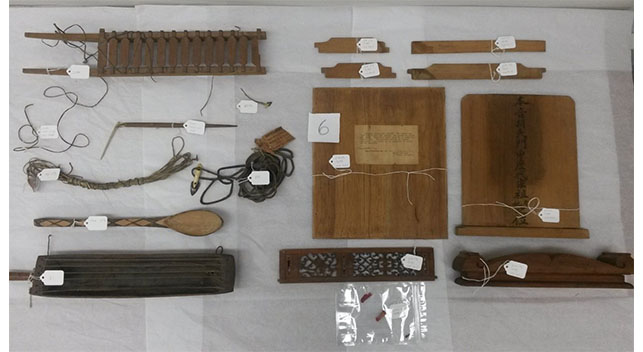
“Native fiddle” located in the bottom left of the image. Photograph taken by Remi Alie

The administrators of Huron University’s Missionary Museum often put forth generic information about the artifacts in their collection. These generic records still form much of the information tied to the Huron Missionary Museum. The presence of an artifact described only as a “six string Native Fiddle,” represents the potential danger of repatriating artifacts without conducting proper research. The third post in this blog series discusses Naamiwan’s Drum: The Story of a Contested Repatriation of Anishinaabe Artefacts by Maureen Matthews, the Curator of Cultural Anthropology at the Manitoba Museum. In this work, Matthews brings forth the case of Naamiwan’s Drum to demonstrate the potential harm of repatriation while neglecting to conduct proper research on the meaning of objects to their source communities. To the Pauingassi Ojibwe community from which Naamiwan’s Drum originates, the instrument carries special significance because of its connection to Naamiwan, who was its first owner. The Pauingassi believe objects like Naamiwan’s Drum are animate and encapsulate a spiritual presence from their owner. [1] Conducting proper research is therefore an essential aspect of the repatriation process to ensure the return of objects to the proper communities. The collection inventory used in this post comes from the Principal of Huron College during the Huron Missionary Museum’s Operation. From 1911-1941, Principal C.C. Waller created an inventory of the Huron Missionary Museum Collection. Remi Alie, a student at Huron College, transcribed this inventory as part of a project in the class “HIST 3801: The Historian’s Craft” at Huron University College. According to Principal Waller’s collection inventory, the artifact located in the bottom left corner of Figure 1 is a six-string “Native Fiddle” from German East Africa, donated by T. B. R. Westgate. However, the inventory mentions nothing of the source community and the potential meanings associated with this object. This lack of specificity means that Huron University knows very little about objects like the “Native fiddle” because it has few other collection resources to consult. We learned in the third post of this blog series that different cultures can attach different meanings to objects. For example, the Pauingassi Ojibwe people from which Naamiwan’s Drum descended, view the object as animate and they thereby have much personal connection it. Administrators at the University of Winnipeg assumed that the Pauingassi Ojibwe no longer practiced traditional Ojibwe beliefs and thereby incorrectly interpreted the Pauingassi’s adaptation of Christian values as a form of distancing from the traditional aspects of their culture. In University’s view, this supposed transition away from traditional values justified the repatriation of the drum and other objects to another Ojibwe community. This decision upset the Pauingassi Ojibwe people who had no idea that these objects (of massive significance to them) would transfer to another community. [2] The University of Winnipeg caused great harm to the Pauingassi Ojibwe by repatriating the objects to another community. If Huron University chooses to explore repatriation without attributing proper research, the college risks repeating the mistakes of the University of Winnipeg. Expansive research plays an important role in improving knowledge of collections. The Waller inventory provides little information about the fiddle found in this image. In this case, it is important that we further explore this fiddle’s history. T. B. R. Westgate (who featured more extensively in the fourth post of this blog series) was a Huron alumnus who partnered with the German East African regime during his time as a missionary in East Africa. This regime killed hundreds of thousands of Indigenous East African people during its rule. [3] It is from this period that Westgate collected objects like this fiddle. This knowledge of Westgate’s colonial influence and collaboration with German East Africa changes the nature of owning or repatriating such objects. Huron now has significant reason to question the ethical collection of objects in its collection. We must ask ourselves: under what conditions did Westgate procure this fiddle? If Huron were to repatriate this object, this question needs to be front and centre. Answering it will help the college respond more appropriately if the source community accepts repatriation. With the knowledge that objects carry different meanings to different cultures, the lack of information known about the “Native fiddle” means Huron could commit grave injustices toward the source community of this object. Committing further time and resources through the practice of practical relativism to researching objects in the collection, like what has begun with this project, will give far more context to the objects. This will allow for more proper coordination and communication with potential source communities as Huron will be better informed of the community’s history and relationship with the object.

Notes

[1] James Leonard Giblin and Jamie Monson, Maji Maji: Lifting the Fog of War (Leiden, The Netherlands: Brill, 2010), 1. [2] Matthews, Naamiwan’s Drum, 177-178. [3] Maureen Matthews, Naamiwan’s Drum: The Story of a Contested Repatriation of Anishinaabe Artefacts (Toronto, ON: University of Toronto Press, 2016), 66.
Continued Colonialism and Museum Collections

Continued Colonialism and Museum Collections

A photograph of four likely knobkerries found in the Huron Missionary Museum collection. Each classified in the Waller collection inventory as a “Club Used for Infanticide.” Photograph taken by Remi Alie

During its operation between 1911 and 1941, the Huron Missionary Museum took a generic and inaccurate approach to describing artifacts within its collection. These descriptions remain as the only pieces of information associated with the artifacts in the Huron Missionary Museum collection. This post and the following will each bring forth one type of object from the Huron Missionary Museum collection that demonstrate the issues with providing inaccurate and generic information about artifacts and the cultures they come from. The inventory of the Huron Missionary Museum describes the artifact type featured in this post as “Club[s] Used for Infanticide.” The true name of these artifacts is knobkerrie. A knobkerrie is a common type of weapon used by many East African cultures for hunting and warfare. These weapons feature long wooden handles that thicken at the top to create a circular shape. The top acts as a club to inflict damage upon targets. [1] The description of the knobkerrie inaccurately depicts the source communities of this artifact. Rather than describing the true use of the knobkerrie as a weapon for hunting and warfare, the museum administrators chose to portray the weapon as a tool used solely for infanticide and thereby inaccurately portray the source community. “Club[s] Used for Infanticide” continues to be the only description tied to these knobkerries in the Huron Missionary Museum. Inaccurate and generalized descriptions of artifacts misrepresent the people they come from. The so-called “Club[s] Used for Infanticide” demonstrate how some museum administrators in the early twentieth century chose to misrepresent the cultures of artifacts in their collection. Colonial museums should expand repatriation efforts to begin healing the harms of misrepresentation. The collection inventory used in this post comes from the Principal of Huron College during the Huron Missionary Museum’s Operation. From 1911-1941, Principal Waller created an inventory of the Huron Missionary Museum Collection. Remi Alie, a student at Huron College, transcribed this inventory as part of a project in the class “HIST 3801: The Historian’s Craft” at Huron University College. Items in the Huron Missionary Museum feature descriptions that inaccurately depict the cultures from which the objects originate. The Huron Missionary Museum collection features several knobkerries or similar objects solely classified in Waller’s collections inventory as a “Club Used for Infanticide.” Rather than a tool created for infanticide like Waller’s inventory insinuates, many East African cultures used knobkerries in large-scale warfare or for hunting. While, like any other weapon, a person wielding a knobkerrie could commit infanticide, this was not the intended purpose of the weapon. [2] Describing the knobkerrie as an infanticide club demonstrates that organizers of the Huron Missionary Museum inaccurately represented cultures instead of presenting a factual and respectful history. A person viewing this description could believe this to be a purpose-built tool for infanticide. This grossly overstates the prevalence of infanticide and casts an overtly violent depiction of the East African communities using weapons like the knobkerrie. The inaccurate descriptions of artifacts in the Huron Missionary Museum continue to be the main source of information available to those looking into the collection. Thus, these descriptions still inform much of the University’s knowledge about this collection. As described in the second post of this series, in Collections and Objections, Michelle Hamilton, a history professor at Western University, argues that early twentieth century collectors of Indigenous objects, like David Boyle, viewed themselves as paternal experts on Indigenous cultures while dismissing the knowledge of Indigenous peoples. [3] This example of the knobkerrie presented as an infanticide club shows that such collectors abused this reputation of expertise at the expense of Indigenous peoples in the various countries that they collected artifacts from. They presented inaccurate information that remains attached to objects in collections like the Huron Missionary Museum. For example, the recent inventory of the Huron Missionary Museum collection relies on the binders created by Principal Waller. Without significant research applied to this collection to find more accurate information, the inaccuracies of Principal Waller will continue to inform those looking into the Huron Missionary Museum. These examples demonstrate the importance of expanding efforts to understand the meaning of objects in colonial collections. The depiction of the knobkerries as solely “Club[s] Used for Infanticide,” shows that museum organizers created inaccurate depictions of objects despite presenting themselves as experts on the subject. That such descriptions remain attached to objects in the Huron Missionary Museum brings further urgency to expanding research efforts to better understand items in the collection for eventual repatriation. Future researchers trusting the inventory descriptions of the Huron Missionary Museum may mislead readers and continue the colonial perspectives put forth by the original Huron Missionary Museum administrators. Furthermore, the current state of the Huron Missionary Museum descriptions makes repatriation extremely difficult. With little knowledge of the collection, Huron University risks incorrectly repatriating objects in the collection. The example put forth by Maureen Matthews with the artifact, Naamiwan’s Drum, at the University of Winnipeg as described in post 3 of this series, serves as a warning for the consequences of improper repatriation. [4] Universities and museums wanting to increase decolonization efforts should conduct proper repatriation through the use of practical relativism, otherwise known as conducting proper research of the object’s history and communities it may belong to.

Notes

[1] Cyril B. Courville, “War Weapons as an Index of Contemporary Knowledge of the Nature and Significance of Craniocerebral Trauma: Some Notes on Striking Weapons Designed Primarily to Produce Injury to the Head,” Medical Arts and Sciences: A Scientific Journal of the College of Medical Evangelists 2, no. 3 (July 1948): pp. 85-111, 89. [2] Courville, “War Weapons,” 89. [3] Michelle A. Hamilton, Collections and Objections: Aboriginal Material Culture in Southern Ontario (Montreal, QC: McGill-Queen’s University Press, 2010), 169. [4] Matthews, Naamiwan’s Drum, 177-178.
Huron’s Colonial Connection to Africa

Huron’s Colonial Connection to Africa

Huron University was once part of a large Christian missionary movement found across much of the world. During the late-nineteenth and early-twentieth centuries, missionaries with ties to Huron partnered with a brutal colonial regime, building the Huron Training College in German East Africa. In the years leading up to the creation of the Huron Training College, German officials in East Africa brutalized and murdered hundreds of thousands of Indigenous Tanzanians during, and in retaliation for, the Maji Maji Uprising after local Tanzanians revolted against forced labour practices. [1] The objects from the Huron Missionary Museum (1911-1944) and the collections remaining at Huron University come, in part, from donors who lived in German East Africa as part of their missionary efforts. To better understand how the Huron Missionary Museum collection developed, this essay aims to demonstrate how the Huron Missionary Museum connects Huron University College to European colonial regimes in Africa. The collection of artifacts by missionaries who partnered with these colonial regimes brings into question the ethical status of the Huron Missionary Museum itself. Huron University originally opened as a theological college for the Anglican Diocese of Huron. Benjamin Cronyn became the first bishop in 1852 and just over a decade later he founded Huron College as a theological institute to train priests and missionaries in the Anglican faith and for service in the new diocese. With the creation of the Domestic and Foreign Missionary Society of the Church of England in 1883, members of the Huron Diocese took a more expansive view of their faith work. In this first year alone, the Huron Diocese contributed $2,438.33 to support overseas missions. In 1902, the Missionary Society of the Church of England in Canada (M. S. C. C.) replaced the Domestic and Foreign Missionary Society as the organization directing missionary efforts for the Anglican Church in Canada. The Huron Diocese contributed $11,000.[2] This new institution started by enrolling every member of the Anglican Church in Canada into its membership.[3] Huron Diocese members hoped for the expansion of missionary work in the Anglican Church of Canada to equal their counterparts in the Anglican Church of England. In A Jubilee Memorial-Diocese of Huron 1857-1907, Archdeacon Richardson, the Archdeacon of London, Ontario, hoped the Anglican Church in Canada would work “in all regions of the heathen,” and become “herself a missionary church, like the missionary Church of England, from which she sprang, taking her full part in the evangelizing of this world.” [4] By the early twentieth century, the Huron Diocese put significant focus on expanding overseas missionary efforts. By 1911, Huron College established the Huron Missionary Museum to display artifacts brought back by alumni on overseas expeditions. Much of the museum’s objects came from the collection of Reverend Thomas Buchanan Reginald Westgate, who graduated from Huron College and later joined the Church Missionary Society in German East Africa around 1902.[5] The Canadian branch of the CMS partially amalgamated with the M. S. C. C. in 1903. Westgate remained a missionary under the German East African C. M. S. while also receiving support from its Canadian counterparts. [6] Westgate’s work with the CMS went hand-in-hand with German imperial interests. In a book about Westgate’s life, his son, Wilfrid, wrote that German administrators saw his father’s missionary work as “an asset to this part of the German colonial empire.”[7] A true test of this relationship came with the Maji Maji Uprising in 1905. The German East African administration enacted legislation for local peoples to perform forced labour to produce cotton. Despite significant language and cultural differences between them, the local population revolted against their colonial rulers. [8] Westgate and his wife feared that the German East African army would lose to the Indigenous population. Westgate showed this fear as he maintained contact with German authorities who protected his missionary station.[9] In 1913, C. M. S. members in German East Africa decided to build a college to train local people to become pastors in the Anglican faith. Westgate had much success gaining fundraising support from fellow alumni of Huron College. Using these funds, the C. M. S. began constructing the building, which they would name Huron Training College and welcomed thirteen students in January 1914. The First World War paused the partnerships with German East Africa, forcing Westgate and administrators to close the school. While Westgate was no longer the principal, Huron Training College reopened in the early 1920s with 47 students enrolled by September 1923.[10] The college continues today under the moniker: St. Philips Theological Seminary. Reverend Thomas Buchanan Reginald Westgate and the Huron Training College of Tanzania demonstrate the connection of Huron University and the Huron Missionary Museum to colonial institutions in Africa. Around the turn of the twentieth century, the Anglican Church of Canada placed more focus on missionary work. This priority, along with the work of other missionary societies, provided the foundation upon which to raise funds to support the work of missionaries like Rev. T. B. R. Westgate. Westgate was Huron Training College’s first principal and alumni of Huron College. As part of his work, Westgate partnered with a colonial regime in Africa in the same region he collected artifacts that are now in the Huron Missionary Museum Collection. The Training College bore the same name of “Huron” before changing to St. Philips Theological Seminary. Many Huron alumni donated toward constructing the school.

Notes

[1] James Giblin and Jamie Monson, eds., Maji Maji: Lifting the Fog of War (Leiden: Brill, 2010), 1. [2] Ven. Archdeacon Richardson, “Historical Sketch of the Diocese,” in A Jubilee Memorial-Diocese of Huron 1857-1907 (London, ON: The London Printing and Lithographing Company, n.d.), pp. 7-91, 88ee-89. [3] Eugene Stock, The History of the Church Missionary Society, vol. 4 (Salisbury Square: London Church Missionary Society, 1916), 88. [4] Richardson, “Historical Sketch of the Diocese,” 90-91. [5] Yves Engler, Canada in Africa: 300 Years of Aid and Exploitation (Black Point, Nova Scotia: Fernwood Publishing, 2015), 56-57. [6] Stock, The History of the Church Missionary Society, 538. [7] Engler, Canada in Africa, 56-57. [8] Giblin and Monson, eds., Maji Maji, 1. [9] Engler, Canada in Africa, 56-57. [10] Hugh Prentice, History of Kongwa: A Centenary History of St Philip’s Theological College, Kongwa, Tanzania, 2014, Chapter 1. https://a.co/bpTBGCo
The Differing Meaning of Objects

The Differing Meaning of Objects

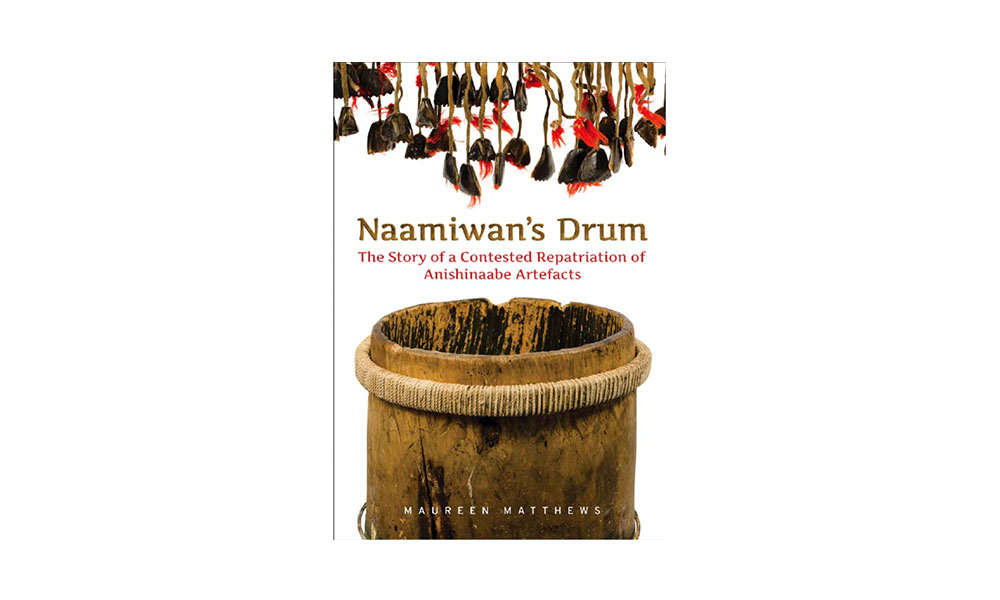
The Huron Missionary Museum operated from 1911 to 1941 at Huron College, with parts of the former museum collection now sitting in storage closets at Huron University.  Repatriation is no simple process and the collection descriptions left behind from the Museum’s past give little relevant information about the objects to go forth with repatriation. Maureen Matthews’ book, Naamiwan’s Drum: The Story of a Contested Repatriation of Anishinaabe Artefacts is a seminal work in the study of repatriation. Matthews is a Curator of Cultural Anthropology at The Manitoba Museum who brings forth the story of Naamiwan’s Drum to enlighten readers about the complex nature of repatriation. Naamiwan’s Drum is an Ojibwe water drum belonging to Naamiwan, a leader of the Pauingassi Ojibwe community before his death in 1943. [1] This drum was one of his most significant possessions. Around 1970, a collector claimed that he saved many Pauingassi objects from decay and brought them to the University of Winnipeg. [2] The University of Winnipeg Museum took ownership of these objects and treated them as proper museum artifacts. Taken out of its original context, the cultural meaning of the drum began to shift. Matthews argues that the cultural meaning of collections may not be as transparent as many believe and that museums must conduct thorough research to ensure they understand the cultural meanings of their objects. To many non-Ojibwe people, for example, Naamiwan’s Drum may simply appear as a historic percussion instrument. This makes the drum important, but no more so than any other historic instrument. To Ojibwe people, however, water drums, like Naamiwan’s Drum, are some of the most important historical objects. According to Matthews, they interpret the drum as an animate being, capable of having thoughts and feelings as well as influencing the community. Matthews explains how, when conducted poorly, repatriation can greatly harm source communities. This can happen when museums misunderstand the meaning of objects to the communities from which they came. Matthews brings forth Naamiwan’s Drum as an example of a museum neglecting to understand the meaning behind its objects and conducting harmful repatriation.

From a general perspective, Ojibwe do not believe that all objects are alive, rather, they believe certain objects can encapsulate the influence of important things in the world around them. While the Ojibwe people view most stones as inanimate, some stones, like a uniquely smooth one, can represent the presence of a living thing. [3] Ojibwe people thus hold more personal connection with animate objects like Naamiwan’s Drum because they see it as an animate being. Naamiwan’s Water Drum is thereby extremely meaningful to the Ojibwe people because it is an object with significant animate connections to Naamiwan, a member of the Ojibwe community.

Matthews’s book demonstrates how the meaning of objects can vary greatly between two different Ojibwe groups. Naamiwan’s Drum holds significance with the Pauingassi – to which Naamiwan belonged – because Water drums like Naamiwan’s are highly personal items to their owners and families. They accompany their owner to significant life events like healing rituals and cultural events while also providing spiritual guidance. [4] This creates a highly personal connection to the community and family to whom such objects belong. The University of Winnipeg put forth some commendable, although imperfect, efforts such as holding the animate objects in restricted storage so they would stay off display and not face unnecessary disturbance. However, when Naamiwan’s descendent Omishoosh visited the collection, his interactions with the objects did not meet the expectations of university staff who expected him to act in a more traditional Ojibwe way. They thus made incorrect assumptions that the Pauingassi people no longer practiced the culture of their ancestors. [5] When The Three Fires Midewiwin Ojibwe people approached the University to claim repatriation rights of the Pauingassi objects, the University agreed without contacting the Pauingassi. The University of Winnipeg decided that the Three Fires Midewiwin deserved the objects because they maintained more traditional aspects of their Ojibwe heritage. [6] By assuming the changing traditions of the Pauingassi meant they no longer held significant connection with their ancestors, the University of Winnipeg Museum irreparably harmed the source community of these objects.

The lesson that Matthews takes from these observations is that it is the responsibility of museums and collection holders to understand the meaning of objects with their home communities or risk causing greater harm through their mistreatment. In the case of Naamiwan’s Drum, the University of Winnipeg failed to fully understand the meaning of Pauingassi objects within their collection. They knew that the drum held significant value to the Ojibwe people but did not put forth efforts understand its meaning to the Pauingassi Ojibwe.

Rather than repatriating the objects to Three Fires Midewiwin Ojibwe, Matthews argues that a proper course of action in this process of repatriation would include practical relativism. Matthews describes practical relativism in relation to repatriation as researching and understanding the meaning of the object to communities connected with the item. [7] If the University of Winnipeg conducted practical relativism in their process of repatriating the Pauingassi collection, they would understand the continued meaning of such important objects to the community. This example shows that repatriation requires expert knowledge of the ideas and beliefs of the original owners of the objects in addition to well-maintained connections with source communities. Only then can a museum fully understand the meaning behind significant objects and make informed decisions. Without conducting practical relativism, museums risk misinterpreting or neglecting to consider the many different possibilities of object meaning. This can cause irreparable harm to stakeholder communities like the Ojibwe Pauingassi.

Matthews’ work demonstrates the importance of conducting repatriation in a good way. It is not as simple as repatriating objects to the first community who asks for them. Museums and collection holders must conduct extensive research, modeled by practices such as practical relativism and community connections, to understand the cultural beliefs of all stakeholders and properly identify the best course of action for each object.

Notes

[1] Maureen Matthews, Naamiwan’s Drum: The Story of a Contested Repatriation of Anishinaabe Artefacts (Toronto, ON: University of Toronto Press, 2016), 10.

[2] Matthews, Naamiwan’s Drum, 131.

[3] Matthews, Naamiwan’s Drum, 66.

[4] Matthews, Naamiwan’s Drum, 4.

[5] Matthews, Naamiwan’s Drum, 177-178.

[6] Matthews, Naamiwan’s Drum, 232.

[7] Matthews, Naamiwan’s Drum, 243.

Paternalism and Early Archaeology in Ontario

Paternalism and Early Archaeology in Ontario

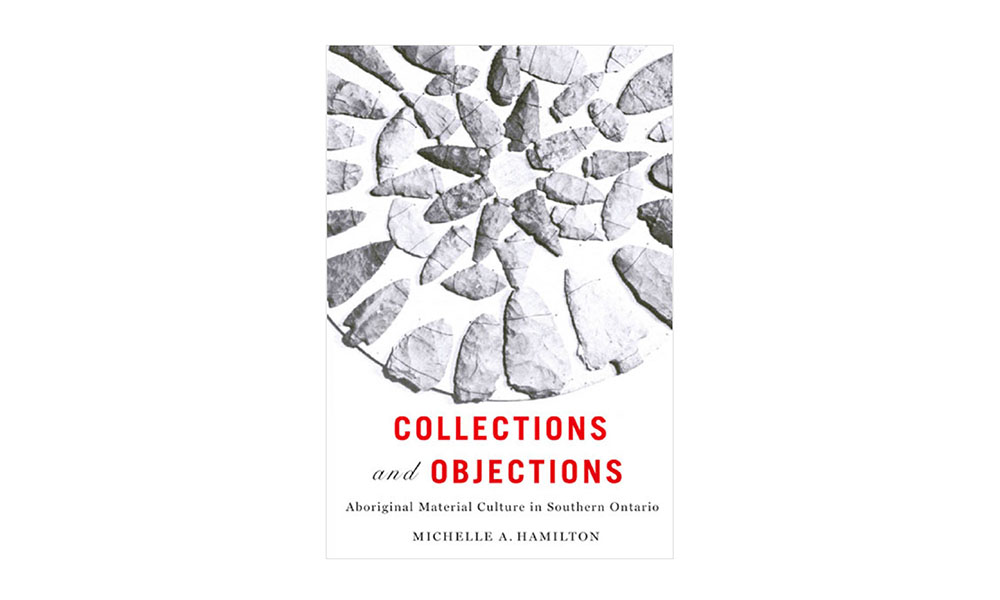
This week’s post discusses how the professionalization of archaeology in Ontario created a culture of paternalism over Indigenous people. Archaeologists used these notions of paternalism to justify their desecration of Indigenous burial sites and non-consensual collection of artifacts. Western University historian, Michelle Hamilton’s book, Collections and Objections: Aboriginal Material Culture in Southern Ontario, 1791-1914. Hamilton’s work shows that professionalizing archaeologists viewed themselves in a paternal light in taking on the burden of another culture that they believed would soon be extinct. These sentiments of paternalism informed the founding of other Indigenous collections like the Huron Missionary Museum. At the heart of Hamilton’s book is David Boyle. Over his lifetime (1841-1911), Boyle served as secretary of the Ontario Historical Society, Curator of the Canadian Institute, and Curator of the Ontario Provincial Museum of Toronto. [1] In these capacities, Boyle travelled across Canada to visit Indigenous communities and collect artifacts to store and study them. Over his career, David Boyle became a major influence in moving archaeology away from a means of bolstering one’s cabinet of curiosity and toward a professional practice of scientific study and analysis. [2] Hamilton argues that the professionalization of archaeology falls into three general categories. Before 1851, there were few if any professional standards in archaeology. At this point, collectors mostly focused on expanding their cabinet of artifacts. The cabinet of curiosities describes typically private collections of artifacts aimed at collecting diverse and unique objects with little focus on education and more on prestige or personal fulfillment in aiming to collect an encyclopedia’s worth of items. [3] There was little consistency in how these collectors obtained and cared for their artifacts. From 1851-to 1884, the industry started moving toward standardizing practices. Some archaeologists formed the Canadian Institute and tried to bring some consistency in how archaeologists collected and kept artifacts. They began separating themselves from amateur archaeologists who had no standards in their methods of collecting and preserving. From 1884-to 1911, there was a further push toward standardizing archaeology and separation from amateurs. Boyle’s career spanned much of this later professionalizing period. However, this professionalization translated into expanded efforts for collecting Indigenous artifacts and disrespecting cultural beliefs in the name of scientific study. [4] In a sentiment that would go on to guide the work of many early professional archaeologists, Boyle felt that no item was off-limits so long as a professional collector aimed to study it for the benefit of scientific study and knowledge. [5] This view included the justification of desecrating Indigenous graves. Nearly all types of burials are sacred, and it is especially the case for many Indigenous peoples. They believe that the body has two spirits, one that leaves the body and one that remains to protect it. Disturbing the grave, including the body and the objects left with it, angers this spirit, and disrespects the beliefs of that person in death. [6] The expansion of professional archaeology and separation from amateurs justified excavations regardless of local support. Hamilton demonstrates how professionalizing archaeologists believed that they were the only people capable of accurately preserving the story of Indigenous people. Hamilton argues that Boyle saw Indigenous people as unable to care for their history: “By placing primacy on the archaeological and historical record, and an allegedly objective scholarly reading of both, Boyle could suggest that he, not Aboriginal community leaders, was the learned expert.” [7] Boyle saw himself as the expert on Indigenous history and argued that Indigenous histories belonged in the care of museums. He contended that modern Indigenous cultures had little connection to the Indigenous peoples of the past and thus had little reason to hold onto these artifacts. Essentially, Boyle did not trust Indigenous peoples to manage their history and took it upon himself to place their artifacts and remains in museums even if it was against their will. [8] These paternal sentiments of taking on the burden of another culture informed the founding of other collections like the Huron Missionary Museum. Huron University alumni, for example, went to Tanzania to open an Anglican school in 1913, only two years after the Huron Missionary Museum first opened. The school was originally named Huron College but soon after became St. Philips Theological Seminary. It trains local people in preparation for becoming ministers in the Anglican Church. [9] The first principal of the college was T.B.R. Westgate, a Huron College graduate and Anglican missionary. [10] In essence, the people on these early Huron College expeditions acted as paternal guides aiming to convert Indigenous Tanzanians toward their Christian beliefs. These missionaries acted similarly in some ways as archaeologists like Boyle had in propelling their beliefs on Indigenous cultures. As evidence of their work, Westgate and several other missionaries brought Indigenous artifacts back from their mission. Many of these artifacts ended up at the Huron Missionary Museum and Westgate’s name remains attached to many of them as a donor. There is little known about the circumstances in which missionaries collected the artifacts now found in the Huron Missionary Museum collection. However, many of the items remain in Huron University College as remnants of the school’s colonial legacy.

Notes

[1] Michelle A. Hamilton, Collections and Objections: Aboriginal Material Culture in Southern Ontario (Montreal, QC: McGill-Queen’s University Press, 2010), 8. [2] Hamilton, Collections and Objections, 15. [3] Thomas Jefferson and Joyce Henri Robinson, “An American Cabinet of Curiosities: Thomas Jefferson’s ‘Indian Hall at Monticello,’” Winterthur Portfolio 30, no. 1 (1995): pp. 41-58, https://doi.org/10.1086/wp.30.1.4618481, 44. [4] Hamilton, Collections and Objections, 169. [5] Hamilton, Collections and Objections, 172. [6] Hamilton, Collections and Objections, 85-86. [7] Hamilton, Collections and Objections, 169. [8] Hamilton, Collections and Objections, 160-161. [9] Phanuel L. Mung’ong’o and Moses Mantonya, “The Anglican Church of Tanzania,” in The Wiley-Blackwell Companion to the Anglican Communion, ed. Ian S. Markham et al. (Oxford: Wiley-Blackwell, 2013), 210-211. [10] Gordon Goldsborough, “Memorable Manitobans: Thomas Buchanan Reginald Westgate (1872-1951),” Manitoba Historical Society, January 25, 2020, http://www.mhs.mb.ca/docs/people/westgate_tbr.shtml.
Introduction to the Huron Missionary Museum Project

Introduction to the Huron Missionary Museum Project

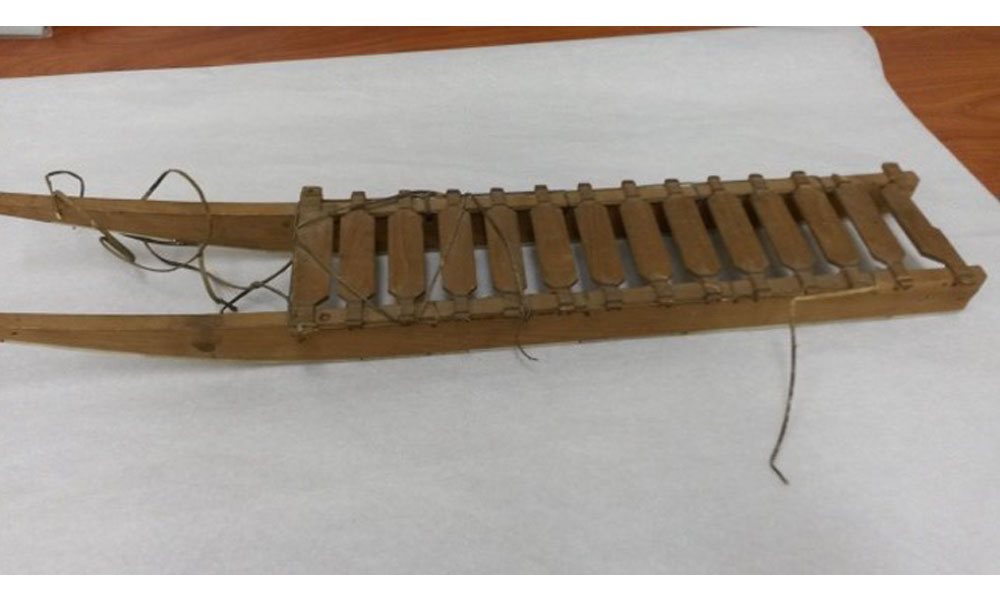
A model sleigh found in the Huron Missionary Museum collection. Photograph taken by Rémi Alie.

Prior to the City of London, the Anishinaabek, Haudenosaunee, and Lūnaapéewak peoples occupied these lands. It is important to acknowledge their continuous history and importance in this region.

Hello and welcome to this study on the history of the Huron Missionary Museum and the importance of repatriation. My name is Kevin den Dunnen and I am going in my fourth year at Huron University in the History program. I am looking forward to this project where I will explore the Huron Missionary Museum collection and the repatriation of colonial collections.

It is important to note that this project is a student work meant to open dialogue on the Huron Missionary Museum and the importance of repatriation. While funded by by a fellowship from Huron’s Centre for Undergraduate Research Learning, this project does not represent the view of Huron University College. However, I hope that it might encourage my university to consider the implications of this collection.

The Huron Missionary Museum operated from 1911 to 1941 as a small collection of artifacts donated by alumni and students of Huron University College who performed missionary work in Africa, Asia, and South America in the early twentieth century. [1] The school placed some of the collection on display in the Huron Missionary Museum to showcase the missionary influence of Huron University College. While no longer part of a museum, some of the collection remains in long-term protective storage within the depths of Huron University College.

This series of blog posts will illustrate the legacy of missionary collections as sites of justification for imperial influence through racist depictions of Indigenous communities as inferior peoples. It will place a particular focus on the Huron Missionary Museum and discuss its legacy of collecting Indigenous objects. The Huron Missionary Museum collection remains a part of the colonial legacy of universities in Canada. A strong way to begin healing a colonial history is by preparing to repatriate such collections by researching and properly documenting them.

Post by Post

This series will feature eight posts published weekly. Following this introduction, the next two posts will analyze two impactful books that focus on the meaning of cultural objects to Indigenous cultures. The first book is Collections and objections: Aboriginal Material Culture in Southern Ontario, 1791-1914, by Michelle Hamilton, a professor of history at Western University. The second book is Naamiwan’s Drum: The Story of a Contested Repatriation of Anishinaabe Artefacts, by Maureen Matthews, a curator of cultural anthropology at Manitoba Museum and adjunct professor at the University of Manitoba. Through analyzing object meanings to local communities, these works demonstrate the importance of repatriating colonial collections and will greatly add to the impact of this project.

Next, I’ll write about Huron University’s missionary connection in East Africa. Specifically, Huron University alumni by the name of T. B. R. Westgate and his major role in the creation of a theological school named Huron Training College. T. B. R. Westgate, partnered with the German East African regime during the period of the Maji Maji Uprising. Causing this Uprising was the institution of brutal labour practices forced upon Tanzanian peoples. To suppress the Uprising, German East Africa killed hundreds of thousands of Tanzanian people both during and after the Uprising.

The fifth post will demonstrate the damaging language found in the main inventory for the Huron Missionary Museum collection. One example is of a knobkerrie, or as the Huron Missionary Museum inventory describes it, a “Club Used for Infanticide.” The knobkerrie, however, is a common East African club designed for warfare and hunting. This demonstrates the inaccuracy of descriptions in the Huron Missionary Museum and how they damage the knowledge and reputation of origin cultures.

The next post will investigate another artifact to show the generic descriptions found in the Huron Missionary Museum database and how they can limit the potential for repatriation. This artifact in the Museum database is a “Six string Native Fiddle.” The inventory offers little other information outside of this basic description. This lack of information and the potential for music instruments to hold significant meaning for source communities increases the stakes for improper repatriation.

Post 7 will focus further on T. B. R. Westgate and his role as a leader of the Anglican residential school system in Canada after returning from his missionary work in East Africa. Westgate’s goal remained the assimilation of Indigenous people as he viewed their culture and beliefs as wholly inferior.

The eighth and final post will argue for the responsibility of institutions to engage in repatriating their colonial collections. While repatriation efforts do not always result in every object returning to its rightful community, institutions should do their best to make it right by their colonial pasts. Rather than think of this as an extraneous task, institutions should consider repatriation efforts as a normal process of decolonizing their institution. [3] 

Acknowledgements

Thank you to the CURL Fellowship program at Huron University College for supporting this project. This series would not be possible without the assistance, knowledge, and project inspiration provided by Professor Thomas Peace. I would also like to thank Professor Amy Bell, who guided some of my early ideas for the project and provided useful resources.

This upcoming series of blog posts would not be possible without the work of former Huron University College student, Rémi Alie. As part of Professor Amy Bell’s “The Historian’s Craft” at Huron, Alie created a catalogue for much of the remaining collections of the Huron Missionary Museum in 2015. In the final remarks of this project, Alie stated “How does this collection relate to the broader historiography of anthropology, collecting, and missionary work in Ontario?” [4] This series of posts will aim to answer the question and expand by bringing in the argument for repatriation.

Notes

[1] Kim Knowles et al., 150 Huron Memories, 1863-2013 (London, ON, Canada: Huron University College, 2013), 6.

[2] Ronda Allen, “The Museum of Ontario Archaeology,” Education Forum: The Magazine for Secondary School Professionals 36, no. 2 (2010): pp. 36-39, 36. “Wilfrid Jury’s Legacy: Wilfrid Jury (Part 5).” Museum of Ontario Archaeology, July 20, 2017. https://archaeologymuseum.ca/wilf_jury_5.

[3] Jordan Jacobs and Benjamin W. Porter, “Repatriation in University Museum Collections: Case Studies from the Phoebe A. Hearst Museum of Anthropology,” International Journal of Cultural Property 28, no. 4 (2021): pp. 531-550, https://doi.org/10.1017/s0940739121000400, 533.
[4] Rémi Alie, “Notes/Recommendations for Further Student Projects,” (unpublished, March 15, 2015).