
Summary:
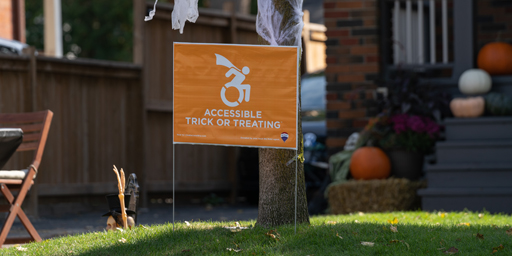
Treat Accessibly was a social entrepreneurial, grassroots movement that focused on creating a more accessible Halloween for all children. Rich Padulo and his wife, Natasha Mackow founded Treat Accessibly in 2017, transforming what started as a simple lawn sign into a nation movement focused on accessibility and inclusion. The organization provided free lawn signs to identify accessible trick-or-treat locations and hosted inclusive Halloween events. Partnerships with companies such as Canadian Tire, Pet Valu, RE/MAX, and Kinder provided the support to expand Treat Accessibly nationwide. Padulo and Mackow were eager to continue this growth but struggled to determine the best course of action: maintaining current operations, expansion to the U.S., joining the Student Collective of Kindness initiative, expanding their marketing by partnering with competitive brands in The Candy Collection or selling the business. Students are expected to analyze the company’s strategic position by identifying its goals, internal capabilities and external factors. They are asked to perform both qualitative and quantitative analyses, such as financial forecasts, to determine the most suitable recommendation. This general management case is designed for an introductory business class at the undergraduate level.
Treat Accessibility: An Inclusive Halloween
Author: Richard S. Bloomfield and Mya Todosijevic
Category:
General Management
Preamble:
This case was written with the support of research assistants, Heather McDougall and Ava Papanikolaou, and was edited by Shahin Pardhan and Katie Oates. Final production of this note was made possible by Ryan Rabie from the Library and Learning Services team at Huron University. The authors' intent for this material is to be used in a classroom or other management learning settings. Names or other identifying information may be altered to protect confidentiality.
Published 08-08-2025
Copyright:
This content is freely available without charge to readers and their institutions. All content is published under the Creative Commons License, Attribution-NonCommercial-NoDerivatives 4.0 International ( CC BY-NC-ND 4.0). Readers are allowed to read, download, copy, distribute, print, search, or link to the full texts of this case without seeking prior permission from the author(s).
Keywords
Social Enterprise, Entrepreneurship